
This website security scanner checks a domain from the outside, the way an attacker or a search engine sees it. It runs about 40 checks in 30 to 60 seconds and gives the site a grade from A+ to F. You do not need to install anything or log in.
Scan a website
Working on it. Please keep this page open; the report appears here when the scan ends.
The scan covers the domain you enter and takes 30 to 60 seconds. Nothing is stored and no login is needed.
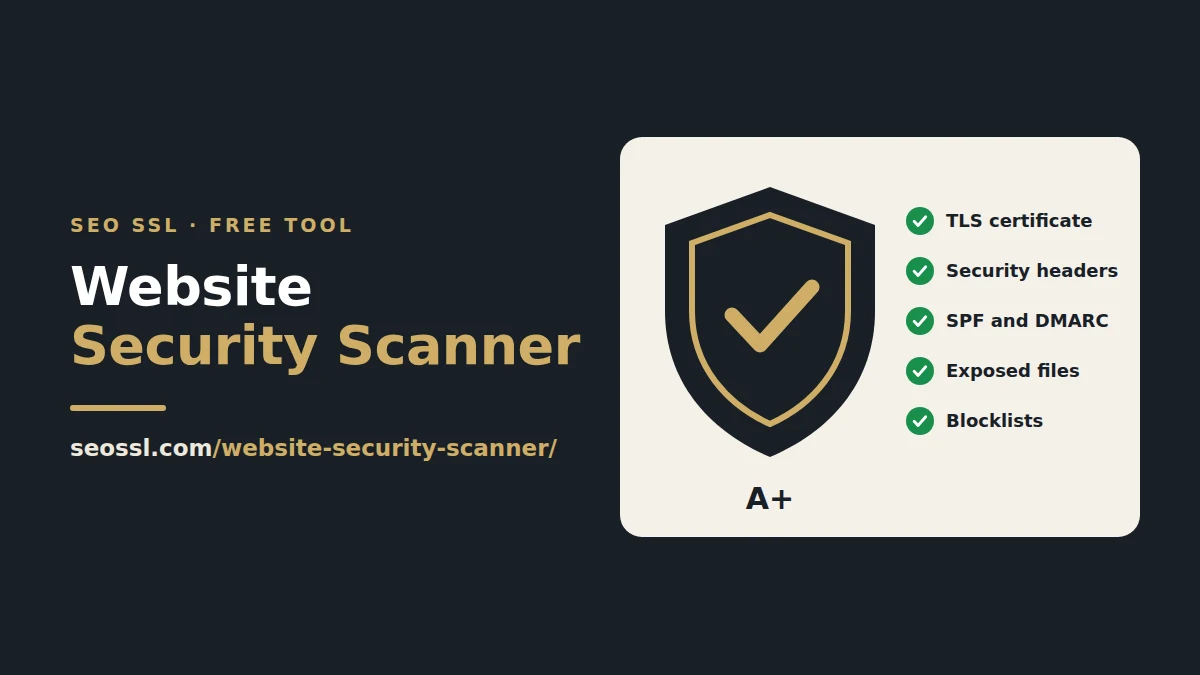
What the scanner checks
- TLS certificate: validity, days until expiry, the domains it covers, and whether the server still accepts TLS 1.0 or 1.1.
- HTTP security headers: HSTS, Content-Security-Policy, X-Content-Type-Options, X-Frame-Options, Referrer-Policy and Permissions-Policy. For CSP the scanner reads the policy itself; a policy that allows
'unsafe-inline'scripts loses points even though the header exists. - Cookies: the Secure, HttpOnly and SameSite flags, and whether cookies are set before any consent.
- Server information: software versions leaked through the Server and X-Powered-By headers.
- DNS and e-mail: SPF and DMARC records, which decide whether someone else can send e-mail in your name.
- Malware and spam signs: injected spam links, defacement and other signs of compromise on the home page.
- Blocklists: the Spamhaus domain and IP lists.
- Exposed files:
.env,.git, configuration backups and open directory listings.
How to read the result
Every check has a number of points. A green mark means the check passed with full points. A warning means it passed with fewer points than the maximum, and the detail line says what is missing. An issue means zero points. The grade is the percentage of points earned out of the total available.
Start with the issues in the exposed files and certificate groups. A public .env file usually contains the database password, so it outweighs every missing header on the list.
What the scan does not do
The scan is passive. It does not try passwords, does not test forms for SQL injection and does not look inside your hosting account. A high grade means the visible configuration is sound. It is not a penetration test and it cannot rule out an infection that hides from visitors.
Frequently asked questions
Will the scan trigger my firewall?
It can. The scanner asks for a few sensitive paths, such as /.env and /.git/config, to confirm they are not public. Some firewalls block the scanner's IP address for a few minutes afterwards. That is the firewall doing its job.
My site is behind Cloudflare. Is the result still valid?
Yes, for what visitors receive. The headers and the certificate are the ones Cloudflare serves. The server information group then describes Cloudflare, since your origin server is hidden behind it.
How often should I scan?
After every change of hosting, theme, CDN or security plugin, and before the certificate is due to renew. The scanner allows 10 scans per hour.
The same checks are part of the free SEO audit, which adds five more tests and e-mails you one report.