
This structured data validator reads the schema.org markup of a page in all three formats (JSON-LD, Microdata and RDFa) and checks it twice: against the schema.org vocabulary and against Google's requirements for rich results. Where it finds errors, it returns corrected code you can copy.
Validate a page
Or paste the code instead
Working on it. Please keep this page open; the report appears here when the scan ends.
One page per check. JSON-LD, Microdata and RDFa are all read.
What the validator checks
- Syntax. A missing comma breaks a whole JSON-LD block. The validator shows the line, the column and the cause in plain words.
- Vocabulary. Types and properties that do not exist in schema.org, usually misspellings such as
OrganisationortelePhone, and values of the wrong kind. - Google rich results. For each feature the page could qualify for, the required and recommended properties, with a link to Google's documentation.
- Google policies. Review stars about your own business, ratings on types that do not support them, and marked-up content that is not visible on the page.
- The entity graph. An
@idthat points to nothing, two organizations that contradict each other, an author given as plain text, wrong positions in a breadcrumb list.
Retired rich results
Google has withdrawn several rich results that many sites still mark up. FAQ results have been limited to government and health sites since August 2023. HowTo results were removed in September 2023, and the sitelinks search box in November 2024. The validator tells you when a block targets a retired feature. The markup is still valid schema.org, but it no longer produces a visual result in search.
The corrected code
When the errors can be fixed automatically, the report includes the full corrected JSON-LD block and a list of what changed. Where a value is missing and cannot be guessed, the code carries a visible placeholder for you to fill in.
The validator then runs its own corrected code through the same rules and reports what remains. Fixing a misspelled type can reveal a policy problem that the original markup was hiding, and you should know that before you publish.
Frequently asked questions
How is this different from Google's Rich Results Test?
The Rich Results Test reports only the features Google supports. This validator also checks the full schema.org vocabulary, Google's policies and the links between entities, and it proposes corrected code.
Can I test code before publishing it?
Yes. Open "Or paste the code instead" under the address field and paste JSON-LD, or HTML that contains any of the three formats.
The page has no structured data. Where do I start?
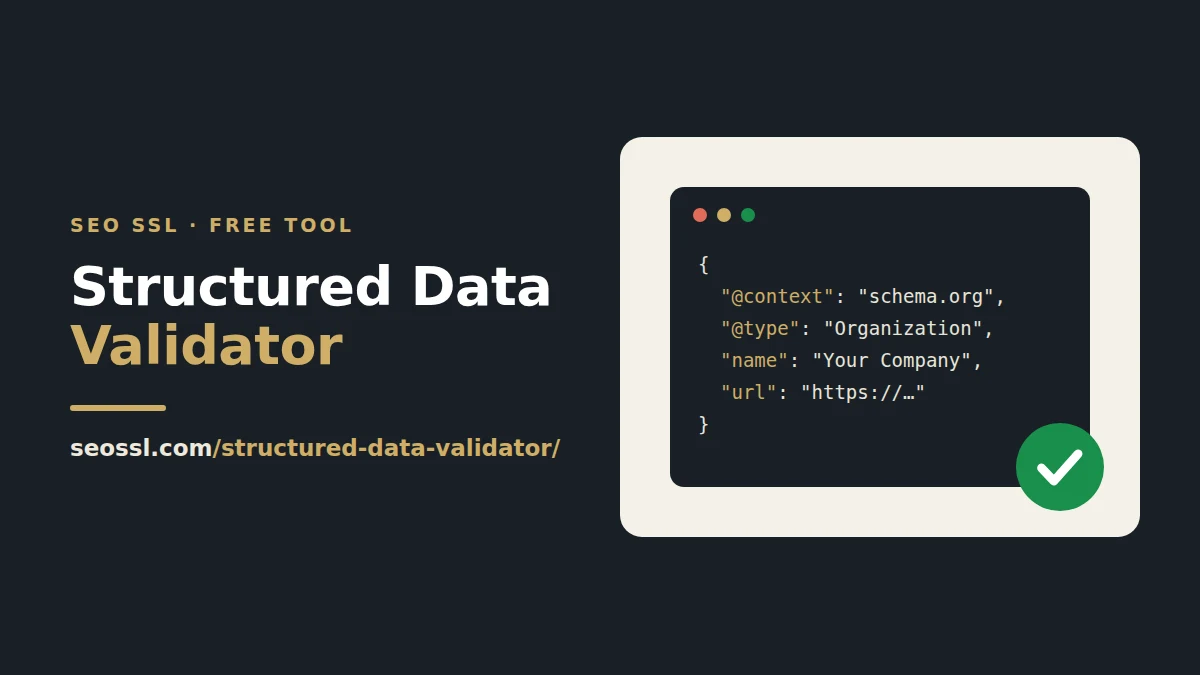
With an Organization block on the home page: name, URL, logo, phone, address and your profiles on other sites. The validator shows a minimal example when it finds no markup.
Why does the validator fail to open my page?
Some sites refuse requests that come from data centres. Paste the page source instead and the result is the same.
Structured data counts for 20% of the score in the free SEO audit.